
What happens in the first 60 seconds of a fire emergency?
Alarms trigger. Sprinklers activate. Systems respond automatically.
But none of it works without one critical space operating flawlessly in the background: the fire pump room.
For engineers, facility managers, data-driven decision-makers, and business leaders building smarter infrastructure, understanding fire pump rooms is no longer optional. It’s strategic.
In this guide, we’ll break down how modern fire pump rooms power high-performance fire protection systems — and how to design them for reliability, compliance, and long-term ROI.
Why Fire Pump Rooms Matter More Than You Think
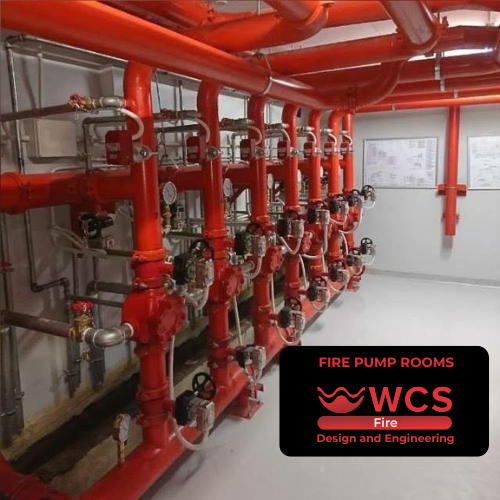
A fire pump room houses the pumps, controllers, and essential components that maintain water pressure for sprinkler and hydrant systems when municipal supply isn’t enough.
In high-risk or high-value environments — including data centres, manufacturing plants, hospitals, logistics hubs, and commercial campuses — water pressure can mean the difference between minor damage and catastrophic loss.
According to the U.S. Fire Administration, non-residential building fires cause billions in property losses annually. Automatic sprinkler systems reduce property damage by up to 70% when properly supplied and maintained.
That supply starts in the pump room.
What Is a Fire Pump Room?
A fire pump room is a dedicated, protected space that contains:
Fire pumps (electric or diesel-driven)
Jockey pumps (pressure maintenance pumps)
Pump controllers
Suction and discharge piping
Backflow preventers
Test headers
Monitoring and alarm systems
These components work together to ensure consistent, code-compliant water pressure during a fire event.
For technical standards and global best practice, systems are typically designed in accordance with National Fire Protection Association guidelines — particularly NFPA 20 (Standard for the Installation of Stationary Pumps for Fire Protection).
Engineering a High-Performance Fire Pump Room
Designing a fire pump room isn’t just about compliance. It’s about resilience engineering.
Let’s break it down.
1. Location & Structural Requirements
A fire pump room should be:
Located at ground level or below
Accessible from outside the building
Enclosed in 2-hour fire-rated construction
Protected from flooding
Properly ventilated
Poor placement is one of the most common design failures — especially in retrofits.
Pro tip: In flood-prone regions, elevate controllers and electrical panels above known flood levels. Flood damage to pump controls can render the entire system inoperable.
2. Water Supply Strategy
Fire pumps activate when system pressure drops.
They rely on:
Municipal water supply
Dedicated water storage tanks
Reservoir systems
In mission-critical facilities (like data centres), redundancy is key:
Dual pumps (duty + standby)
Diesel backup in case of power failure
Independent water tanks
Smart building designers increasingly integrate pump performance data into Building Management Systems (BMS) for predictive maintenance.
3. Power & Reliability Considerations
Electric fire pumps require a reliable power source.
Best practices include:
Dedicated electrical feeders
On-site generators
Automatic transfer switches
Surge protection systems
Diesel pumps provide additional redundancy, particularly in areas with unstable grid infrastructure.
In South Africa, where load shedding can disrupt operations, diesel-driven fire pumps are often a critical risk mitigation measure.
Compliance Isn’t Optional — It’s Strategic
Fire pump rooms must comply with:
NFPA 20
Local building regulations
Insurance requirements
SANS standards (where applicable)
Non-compliance can result in:
Insurance claim rejection
Occupancy delays
Legal liability
Reputational damage
For commercial property developers and facility managers, compliance is not a cost — it’s asset protection.
For local regulatory guidance, consult the South African Bureau of Standards (SABS) framework: https://www.sabs.co.za
Smart Fire Pump Rooms: The Future Is Connected
Today’s fire pump rooms are no longer “set and forget.”
They’re becoming intelligent assets.
Modern enhancements include:
Remote monitoring
Real-time pressure analytics
IoT-enabled pump controllers
Automated testing alerts
Predictive maintenance dashboards
Engineers and data teams can leverage telemetry to:
Detect pressure anomalies
Predict seal failures
Monitor runtime cycles
Reduce unplanned downtime
In high-value facilities, integrating fire suppression infrastructure into digital twin models improves risk forecasting and resilience planning.
Common Fire Pump Room Mistakes (And How to Avoid Them)
Even well-funded projects make avoidable errors.
Watch out for:
Undersized pumps
Inadequate ventilation
Poor drainage design
Insufficient clearance for maintenance
Lack of redundancy
Ignoring future expansion needs
Actionable Tip:
Always design for 10–20% future capacity expansion. Business growth shouldn’t require a full fire system overhaul.
Fire Pump Room Maintenance: Protecting Your Investment
Installation is only the beginning.
Regular inspection and testing are essential to ensure readiness.
Maintenance best practices:
Weekly churn tests
Monthly controller inspections
Annual full-flow testing
Battery and fuel system checks (diesel units)
Calibration of pressure sensors
Facilities that implement digital maintenance tracking reduce system failure rates significantly compared to manual logbooks.
When Should You Upgrade Your Fire Pump Room?
Consider upgrades if:
Your facility has expanded
Insurance requirements have changed
You’ve experienced pressure inconsistencies
Equipment is 15+ years old
You’re modernising infrastructure
Upgrading is often more cost-effective than facing post-incident recovery.
Partnering with the Right Fire Protection Specialist
A fire pump room is not a DIY project.
It requires:
Hydraulic calculations
Risk assessments
Regulatory compliance expertise
Long-term service support
At WCS Fire, our team designs, installs, and maintains integrated fire pump systems tailored to industrial, commercial, and high-risk environments.
Explore our full range of fire suppression and protection services here:
👉 https://wcsfire.co.za
You may also be interested in our guide on fire suppression systems and integrated safety planning available on our blog.
Conclusion: Build Infrastructure That Protects What Matters
In the age of AI, automation, and smart infrastructure, your fire protection system must be just as intelligent as your operations.
A properly engineered fire pump room:
Protects assets
Reduces risk exposure
Ensures compliance
Safeguards people
Preserves business continuity
Don’t wait for an inspection failure — or worse, a fire event — to evaluate your system.
Ready to future-proof your fire protection infrastructure?
Contact WCS Fire today for a professional fire pump room assessment and compliance review.
Your resilience strategy starts here.