
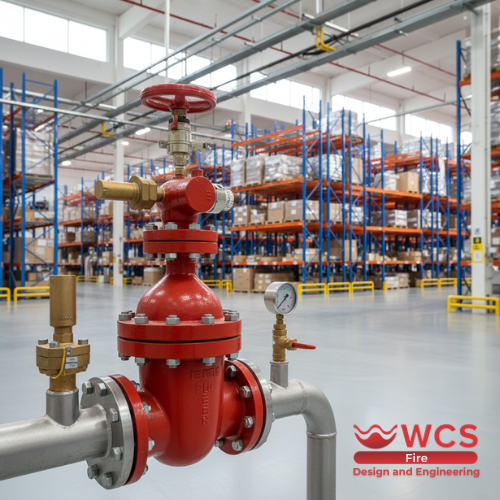
Deep Dive into Industrial Suppression Systems
Introduction: In a factory or high-rack warehouse, the environment presents unique and severe fire challenges. From the vast, unheated spaces and complex electrical panels to the concentration of high-value inventory and machinery, generic fire protection is simply inadequate. Your suppression system must be a highly engineered solution tailored to the specific hazards within your industrial footprint.
At WCS Fire, we work exclusively with industrial clients to implement systems that offer maximum protection against the operational and financial fallout of a fire incident.
Section 1: The Core Risks in Industrial Environments
Industrial facilities demand specialised solutions due to these primary risk factors:
High-Value Assets: Expensive manufacturing equipment, robotics, and integrated machinery that are costly to replace and vital to operations.
Flammable & Combustible Materials: Storage of chemicals, oils, paints, and raw materials that fuel rapidly-spreading fires.
Complex Storage: High-density, vertical storage in warehouses requires systems (like Early Suppression Fast Response – ESFR or specialized In-Rack Sprinklers) designed to penetrate high shelving and combat deep-seated fires.
Unheated Spaces: Many large warehouses or loading bays are unheated, requiring systems that prevent pipes from freezing.
Section 2: Industrial-Grade Suppression Technologies
WCS Fire deploys and maintains the following systems, specifically engineered for large industrial and commercial sites:
Water-Based Systems (Adapted for Industrial Scale)
Dry Pipe Systems: Utilised in unheated warehouses or areas exposed to freezing temperatures. These systems hold pressurised air until a fire event opens the sprinkler head, triggering the water flow.
Deluge Systems: Essential for areas containing highly flammable liquids or hazardous processes where a fire spreads rapidly. These systems discharge water from all open sprinklers simultaneously upon detection, ensuring instant and widespread coverage.
Pre-Action Systems: Highly recommended for areas where accidental water release is catastrophic, such as valuable machinery rooms or electronics storage. They require a two-step trigger (smoke/heat detection plus sprinkler activation) to ensure water is only released when absolutely necessary.
Specialized Fire Suppression Agents
Foam Systems: Used to protect assets like fuel storage tanks, chemical plants, and oil refineries. Foam works by cooling the fire, suppressing the vapour, and smothering the blaze, making it the most effective agent against flammable liquid fires.
Clean Agent Systems (e.g., FM-200, Novec 1230): Crucial for the protection of mission-critical server rooms, control panels, and uninterruptible power supply (UPS) batteries located within the factory or warehouse. These gaseous agents extinguish fires chemically without damaging sensitive electronics or leaving behind residue.
Section 3: Your Partner in Industrial Fire Safety
Choosing the correct system is complex—it involves balancing asset sensitivity, hazard classification, local building codes, and insurance requirements.
WCS Fire offers end-to-end industrial protection services:
Hazard Analysis: Determining the correct system type based on your stored inventory and machinery.
Custom Engineering: Designing large-scale systems to maintain adequate water flow and pressure across vast areas.
24/7 Service & Compliance: Ensuring your critical systems are always operational and compliant with NFPA standards and local regulations.
Don’t compromise on the safety of your business continuity. Invest in a fire suppression system built for the challenges of your industrial environment.
Contact WCS Fire today for a comprehensive Industrial Fire Risk Assessment and a tailored protection proposal.